
The Door to Freedom – Black Soldiers in the Revolutionary War

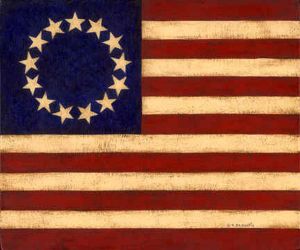
13 star American Flag pinterest

Ever wanted to be a member of the Daughters or the Sons of the American Revolution (DAR and SAR) but felt that descendants of Africans did not serve in the War, and therefore you could not qualify? Well, hold on! The family was right in the middle of the Revolutionary War, fighting for the freedom of this country, as well as for themselves and their families.

As we finish this branch of the family tree, we are traveling to Colchester, Connecticut. Colchester is East of Vernon, where we left Edward and MaryanneFreeman in the last post, and is located in New London County in southeastern Connecticut. This section of Connecticut was the largest slave holding region in New England.

Colchester is known for starting the Colchester School for Colored Children, founded in 1803 and located behind the Colchester Congregational Church near the town green. This was the first Connecticut school formed to provide education for black children. Black teachers were hired at town expense, and parents were expected to help pay the cost of their children’s education. The school was closed in 1848 as students were accepted into the Bacon Academy and local schools.

Colchester is a site on the Connecticut Freedom Trail. More information about the Freedom Trail can be found at http://www.ct.gov/cct/lib/cct/FreedomTrail_Brochure_final.pdf.  If you live in New England, this can be a good family day trip as the weather warms up.

Today we are visiting the Eli Freeman and Edward (Ned) Carter families, both of Colchester, the last twigs we have found on this branch. There is limited information available on these families, but enough, particularly on the Carter family, to give us a sense of their lives, as well as their service to their country. Two resources provided a great deal of the information and stories I have been able to find on these families:

James M. Rose, Barbara W. Brown. (1979) Tapestry: A Living History of the Black Family in Southeastern Connecticut. New London: New London County Historical Society.
Barbara W. Brown, James M. Rose, Ph.D. (2001) Black Roots in Southeastern Connecticut 1650-1900. New London: New London County Historical Society.

You can find these resources through your library, interlibrary loan, or copies for sale at various sites on the Internet. You will find more detailed stories, particularly on Ned Carter, his sons, and their Revolutionary War service, in these resources. I really recommend that descendants try to purchase a copy of Tapestry. The story of the Revolutionary War experience of the Carters is something that you will want to pass on to your children and grandchildren.

The parents of Edward Carter Freeman, who we discussed in the last post, are EliFreeman and Sarah Carter, both of Colchester. Eli was born around 1765, probably in Colchester. In 1800 he was listed in the Colchester Federal Census as head of a family of six and as a free man of color. He was not listed as an independent household in the 1810 census. All free people of color in Colchester were listed as part of a white person’s household, so they are unable to be identified separately. In the 1820 census, there were five in the family: one male under 14 years old, one male 14 to 25 years old and one male over 45 years. There was one female under 14 years old, and one over 45 years. One person was employed in agriculture, probably as a farm hand.

The identity of Eli’s wife and the birth dates of his children are taken from the ledger of Dr. John R. Watrous of Colchester, who delivered the babies. Eli married Sarah Carter about 1790.

Eli and Sarah had at least seven children. Very little is known about the children. All were born in Colchester.

  1. Child was born October 1791 and died February 17, 1795 in Colchester.
  2. Child was born in May 1793 and died December 1, 1795 in Colchester.
  3.  Child was born in December 1794 and died December 1, 1795 in Colchester.
  4.  Child was born in October 1796.
  5.  Child was born in September 1798.
  6.  Statira was born between 1800 and 1804. In 1870 she was living in Hartford and working as a housekeeper.
  7.  Edward Carter Freeman was born January 18, 1815, and died April 20, 1890 in   Vernon.

Eli probably died between 1820 and 1830. He was not found in the 1830 census.
Sarah (Sally) Carter was the daughter of Edward (Ned) and Jenny Carter. The dates of Sarah’s birth and death are unknown, but if she is the daughter of Jenny she would have been born before her mother’s death in July 1766. If she was born in 1765, she would have been 31 at the birth of her first child, and fifty at the birth of her last child. There was a large gap in ages between child six and seven; however, it is possible for a fifty year old woman to have a child. It is also possible that Sarah’s mother was Sybil, her father’s second wife and Sarah was born after 1765. There is no documentation to support which woman was Sarah’s mother. Sarah’s death is unknown.

Ned Carter, Sarah’s father, was probably born around 1720. He was originally the slave of Jonathan Kellogg of Colchester. [1] Ned Carter served at Crown Point (Fort on Lake Champlain on what is now the border between New York and Vermont) during the French and Indian War in 1755, and was emancipated because of his service in the war. However, his family was still enslaved. His wife, Jenny, was also a slave of Jonathan Kellogg. Several of Ned and Jenny’s children were given as property to Jonathan’s sons.

In January 1776, the Continental Congress approved a plan allowing free Negroes to serve in the Continental Army. In May 1777 Ned and his son Esau enlisted. Esau was emancipated in May 1777 by Israel Kellogg, his owner and son of Jonathan Kellogg, so that Esau could join the Army. Asher, another of Ned’s sons, enlisted May 1, 1777, which meant he had to be emancipated before this date. Ned’s son, Aaron, was emancipated by Christopher Comstock of Chatham. Aaron paid 40 pounds for his freedom, which was probably what he received for entering the service as a substitute for Salmon Root of Chatham. A fourth son, Edward Junior, also enlisted in the Spring of 1777. He had already served nine months before he reenlisted. He and his family were emancipated as a result of his service. The Carters were in many of the important battles of the Revolutionary War, and suffered through the difficult winter at Valley Forge. Tapestry gives an amazing summary of the various campaigns the Carter family fought in, and their contribution to achieving independence from Britain.

Jenny, Ned’s first wife, was a slave of Jonathan Kellogg. She was baptized in the First Church of Colchester on April 11, 1742. In 1750 three children, listed as servants of Jonathan Kellogg, were baptized. These children were probably hers. Jenny and Ned had at least seven children:

  1. Edward (Ned) Carter Jr was born about 1750. Edward married Eunice Williams around 1773 in Chatham. By 1805 he and his family had moved to and purchased property in Ellington. He also changed his last name to Chappell. His grandson, who identified as Indian, would marry into the Andrews family. Edward and Eunice had at least 11 children. He collected a pension from his Revolutionary War service, as did his widow after his death. He died February 26, 1826.
  2. Esau was born about 1755. Jonathan Kellogg willed 10 year old Esau to his son Israel in 1765. [2] In February 1770 Esau was arrested for breaking the Sabbath. Israel paid the fine. Israel emancipated him in 1777 so that he could join the Continental Army. After he returned from military service, he married Anna. By 1800, he had moved to Tolland, Connecticut and was living beside his older brother Ned. There were six in the family. In 1810 he was living in Willington with 9 in the household. He died between 1810 and 1820. His wife is listed as head of the household in the 1820 federal census.
  3. Sarah was discussed previously, and might not be the daughter of Jenny.
  4. Aaron was born about 1745, and married Rachel Bolles in 1765. He purchased his freedom from Christopher Comstock in 1777 and entered the Continental Army. In 1790, he was living beside his brother Jacob, and had ten in his household. In 1793 the town of Colchester gave him supplies to move, and he moved to Windsor, Connecticut where he died in 1797. Rachel moved to Middletown and collected a pension based on her husband’s service.
  5. Jacob was given as a child to Joseph Kellogg, Jonathan’s oldest son. When Joseph died in 1762, Jacob was given to his oldest son Silas. In 1783, he was a free person and was warned by the town of Colchester to leave, along with his wife Mercy. That warning was later rescinded and Jacob stayed in town. He was in the 1790 Federal Census with four in the household. In 1794 his father, Ned, was living with him and the town paid for his board. Jacob died October 30, 1794. His wife continued to care for Ned after Jacob’s death. Jacob and Mercy had at least two children.
  6. Asher was emancipated by 1777 when he enlisted in the Continental Army. He did not receive family supplies so he would have been single. Following the War he married Rachel (last name not known), and was living in Middletown by 1812. Rachel and Asher had at least two children. He was listed in the 1820 Federal Census for Middletown with six in the family. Asher died before 1830. His widow was listed in the 1830 Federal Census with four in the family.
  7. Child died April 12, 1763.

Jenny Carter died July 25, 1766. We know that not all of her children were free when she died. We do not know if she had been given her freedom before her death.
Ned Carter married (2) a woman named Sybil following Jenny’s death. They had at least two children.

  1.  Amos was probably born between 1766 and 1770. He was billed by Dr. John Watrous of Colchester for medical treatment of his mother in 1790. He was referred to as both Amos Carter and Amos Ned. No record has been found for him after 1794.
  2. Infant child baptized in sickness October 22, 1774. Nothing else is known about this child.

Sybil died around 1794. Her husband, Ned Carter, then lived with his son Jacob, and his wife Mercy. Since the town of Colchester paid for his expenses and board following his wife’s death, Colchester threatened to sue the heirs of Jonathan Kellogg for his support. The suit was dropped upon his death on January 10, 1797.
[1] Timothy Hopkins. (1903). The Kelloggs in The Old World And The New. California: San Francisco.
[2] Ibid., Volume 1, p. 46.

You can get a free e-copy of the Kelloggs book on Google books. You can also purchase copies through Amazon.com. The book has information on the family who were the slaveholders of the Carter family, which includes some information on their slaves.

This concludes the stories on this branch of the tree.

The next post will bring us back to Monson and Palmer, Massachusetts and the Wallace family. The Wallace family is one of the earliest black families to settle in these towns.

Until next time….
Teri

From Slavery to Indenturing Children: The Russell and Anderson Families of Connecticut

I usually think of indentured servants as those immigrants who came to the colonies, and in exchange for their passage across the ocean were indentured for a period of years, usually seven, to work off their debt to their benefactor. Yes, it was a form of slavery, but there was an end in sight. Some of my relatives came to this new land as indentured servants, and I had relatives who as children were indentured following the death of their father.

However, I was surprised to see in the Connecticut families we are following parents, who themselves had been enslaved, indenturing their children. I can only guess at the reasons. Time travel would be the only way of knowing for sure! Were the families so poor that they were having trouble supporting their children? Did they truly want their children to learn a trade so that they might have more opportunities for employment in post-Revolutionary War New England?

“To Selectmen of Middletown: My son Samuel Peters is now living with Joel (Foote) Esq. of Marlborough and I wish to have him bound out to him until he arrives to the age of 21. The Mr. Foote doing by the boy as is customary and learn him a trade.” Signed by Fortune Russell and Jane Russell. Indenture date was March 28, 1826. Samuel was about eight years old. [1]

Sawney Anderson, the father of Fortune’s first wife Rebecca, bound out three of his children. However, their contracts were more specific with the type of trade they were to learn, and I would consider this more as apprenticeships, however without payment. Daniel Anderson was 19 when he was bound to Roger Brown of Wethersfield for two years to learn the trade of cordwainer. Sawney’s daughter, Else Anderson, was 12 when she was bound to Elisha Hale of Glastonbury to age 18 to learn the trade as servant. And Sonny Jr. was 17 when he was bound to Elisha Hale for four years to learn the trade of cooper. [2] Sonny did become a cooper in Glastonbury following the apprenticeship.

This week we will visit the Russell, Peters, and Anderson families. As we get closer to the Revolutionary War and slavery in Connecticut, the information available on the families become more limited, and as we “dead end” it is likely because individuals and families were enslaved.

The parents of Mary Ann Fortune Russell, the wife of Edward Carter Freeman and whose family we discussed in the last blog, were Fortune Russell and Jane Peters.

Although some records indicate that Fortune Russell was born around 1775 in Marlborough, Connecticut, I believe he was actually born earlier than that. I have found no actual documentation verifying his date of birth. However, on June 13, 1790 he married his first wife, Rebecca Anderson, of Glastonbury, Connecticut. Few men married at the early age of fifteen years. I think he was probably at least ten years older and was born around 1765. It is very possible that he was born into slavery, but had been freed by the time of his marriage.

Rebecca Anderson, born May 8, 1768 in Glastonbury, was the daughter of Sawney Anderson and Susannah Freeman. Sawney was formerly a slave of Captain Peter Harris of New London, Connecticut and was part of the sale of the estate of Captain Harris upon his death. Sawney was purchased by Venture Smith, himself a former slave, and was allowed to work for wages and pay off his debt for his own freedom.

“…in the consideration of the Sum of Forty Pounds in Money & Ten Bushels in Corn & Ten Bushels Rye to us in Hand paid by Venture Smith of East Haddam in Hartford County received to our full Satisfaction……Sell. Set-Over & deliver unto the said Venture Smith a Certain Negro Man named Sawney which was the Property of said Capt. Peter Harris Deceased. Seventh Day of December 1778
East Haddam October 26, 1779

The Within Bill of Sale was given upon Condition in Nature of a Mortgage for a small sum that I was bound in for Sawney & he having paid the same. I do this day Deliver this Bill of Sale to Sawney having no further claims upon him.
Venture (his X mark) Smith” [3]

Sawney moved to Glastonbury and purchased property. He and his son, Sawney, Jr. also owned a sloop. Sawney did indenture several of his children to learn trades, and his second wife, Phillis, died in the poor house. Sawney and his wife Susannah had at least seven children.

Rebecca Anderson and Fortune Russell had eight children. The original vital records did not always include the year of birth, or the year was illegible.

1. Horace was born December 20, 1785 and died March 14, 1848. He married (unknown) Carter on May 13, 1813. He died from dropsy (edema) due to intemperance (excessive use of alcohol). His year of birth is based on his death records, which indicated he was 63 at the time of death.
2. Elias was born August 13, 1799. No further information has been found on him.
3. Emeline was born December 20, unknown year. No additional information is known about her.
4. Daniel Anderson was born March 20, 1806, and died July 29, 1847 from dropsy due to intemperance.
5. Caroline was born March 20, unknown year. She married Rosewell Russell, Jr. on August 25, 1845, and she died August 31, 1869.
6. Lucretia was born February 5, unknown year. No additional information is known about her.
7. Ichabod Pease was born May 1, unknown year. No additional information is known about him.
8. Clarissa was born October 11, unknown year and died August 31, 1869. No additional information is known about her.

Rebecca died January 27, 1810 in Glastonbury. Fortune’s second wife was Jane Peters. Jane was born about 1780 in Glastonbury. I was not able to determine who her parents were, but she was probably related to the other Peters families living in Glastonbury. Fortune and Jane married on December 1, 1822. Children of Fortune and Jane are:

1. Samuel Peters was born about 1818. Other than the information on his indenture, nothing else is known about him.
2. Mary Ann Fortune was born August 20, 1817 and was discussed in the previous blog on the Edward Carter Freeman family.
3. George was born July 1, 1819. No additional information is known about him.

Fortune was found in the Federal Census for Glastonbury in 1810, 1820, and 1830. He probably died between 1830 and 1840. Jane was found in the 1850 Federal Census living in the Oliver Hale family household. She was 70, and the only black person living in the household. She likely was a servant in the household. She probably died between 1850 and 1860.

I recommend the following autobiography to learn more about slavery in Connecticut. It is available on-line.

A Narrative of the Life and Adventures of Venture, a Native of Africa: But Resident above Sixty Years in the United States of America. Related by Himself: Electronic Edition. Smith, Venture, 1729?-1805 http://docsouth.unc.edu/neh/venture/venture.html

Venture was almost seven years old when he was captured in Africa and sold into slavery. His autobiography provides insight into what it was like to be enslaved, and his journey towards regaining his freedom. Venture purchased Sawney Anderson and allowed him to regain his freedom.
[1] Kathy A. Ritter. Apprentices of Connecticut 1637-1900. Salt Lake City, Utah: Ancestry Publishing, 1986.
[2] Ibid.
[3] Patricia A. Trapp. Silent Voices and Forgotten Footsteps. A Chronicle of the Early Black Culture of Glastonbury, 1693-1860. Thesis for Masters of Arts in Liberal Studies, 1996. Wesleyan University. Self published.

We will finish this line of the family tree in the next post where we will discuss the Eli Freeman family, and the Ned Carter family.

Until next time…..

Teri

The Powers Family of Ludlow, Massachusetts and Suffield, Connecticut, Part 2

Marcus and Lovina Powers

The earliest family members identified on this branch of the tree are Marcus (also known as Mark) and Lovina Powers. Marcus and Lovina, as well as their oldest children, were probably slaves for part of their lives. Marcus was born about 1760 in Rhode Island, and Lovina was born about 1764 in Colchester, Connecticut. Rhode Island and Connecticut had the largest number of slaves in the New England states, and most blacks were enslaved when Mark and Lovina were born. In 1774, Suffield had 33 enslaved individuals, Colchester had 173, and Connecticut had 5,101 slaves, the most of all the New England states. In addition to Africans who came here as part of the slave trade, Indians were enslaved during the various Indian Wars. Continue reading “The Powers Family of Ludlow, Massachusetts and Suffield, Connecticut, Part 2”

George W and Jeanette (Freeman) Andrews of Vernon and Manchester, Connecticut

RI 14th Heavy Artillery Battle Flag
RI 14th Heavy Artillery (Colored). Used by regiment during Civil War. Textile collection RI Historical Society rihs.org


When George Washington Andrews, Ruth Andrew’s great grandfather, was born in 1853, the United States was in turmoil over slavery. Franklin Pierce was the 14th President of the United States. Harriet Beecher Stowe had released her bestselling book “Uncle Tom’s Cabin” the year before. When George was four, the Supreme Court issued the Dred Scott decision, stating that slaves are not free when transported from a slave territory to a free territory. They also ruled that Congress could not ban slavery in a U.S. Territory, and that blacks could not be awarded citizenship.

Abolitionists, opposed to slavery, became more vocal. The conflict between pro-slavery and anti-slavery supporters became more violent. John Brown, educated in Massachusetts and Connecticut, became strongly committed to the abolitionist movement while living in Springfield, Massachusetts. He became the leader of violent actions against slaveholders and slave supporters, most known for the Pottawatomie Massacre in Kansas of pro-slavery supporters and the raid on Harper’s Ferry in Virginia while trying to initiate an armed slave revolt. The turmoil of the 1850s led to the Civil War. It was much better to be a black or Indian family living in the North than the South, but life was hard.

In New England, the Industrial Revolution resulted in more factories opening along rivers. The upper Connecticut River Valley experienced the growth of industry, as well as French-Canadian and other immigrants moving to the area to work in the new industries.

George Washington Andrews was born March 25, 1853 in Ludlow, Hampden County, Massachusetts. He was the son of Calvin Dexter and Lovina (Jones) Andrews, and the sixth of 10 children. About the time of his birth, his father left the family and moved to Ellington, Connecticut. Not far from Ludlow, Dexter saw this as an opportunity to ensure his family had a better life. His family received state assistance and was listed on the Ludlow pauper rolls as early as November 1, 1853.[1] Lovina’s family was still living in Ludlow, and provided support for her and her children while her husband was getting established in Connecticut. Her family was from Connecticut, and there was movement back and forth between Massachusetts and Connecticut among family members. Continue reading “George W and Jeanette (Freeman) Andrews of Vernon and Manchester, Connecticut”

David Perkins and Rose Grimes Families

I believe that when our ancestors want to be found, they will lead the way. That has happened so many times in my search for their stories. I could find very little on the parents of Patience Perkins over the years that I searched. I found Rose, Patience’s mother, in Newport from about 1900 until 1911, and then she disappeared. Patience’s father was also hiding. I knew he was from North Carolina, and that was it. A few years ago, I searched again for records on Rose, and found her death certificate! Woohoo! From the information on the certificate, I verified where she was born; found out her maiden name, her husband’s name, and the daughter that she lived with the last few years of her life. She was ready to be found! From that information, I was able to find both the Perkins and Grimes families in North Carolina, and began to learn their stories.

Slavery is part of the history of most African-Americans. However, actually finding those connections, and looking at the slave schedules and knowing that this is probably the family I am looking for is sobering and disturbing. The Perkins and Grimes families are from Pactolus in Pitt County, and Little Washington in Beaufort County, North Carolina. Continue reading “David Perkins and Rose Grimes Families”