From Slavery to Indenturing Children: The Russell and Anderson Families of Connecticut

I usually think of indentured servants as those immigrants who came to the colonies, and in exchange for their passage across the ocean were indentured for a period of years, usually seven, to work off their debt to their benefactor. Yes, it was a form of slavery, but there was an end in sight. Some of my relatives came to this new land as indentured servants, and I had relatives who as children were indentured following the death of their father.

However, I was surprised to see in the Connecticut families we are following parents, who themselves had been enslaved, indenturing their children. I can only guess at the reasons. Time travel would be the only way of knowing for sure! Were the families so poor that they were having trouble supporting their children? Did they truly want their children to learn a trade so that they might have more opportunities for employment in post-Revolutionary War New England?

“To Selectmen of Middletown: My son Samuel Peters is now living with Joel (Foote) Esq. of Marlborough and I wish to have him bound out to him until he arrives to the age of 21. The Mr. Foote doing by the boy as is customary and learn him a trade.” Signed by Fortune Russell and Jane Russell. Indenture date was March 28, 1826. Samuel was about eight years old. [1]

Sawney Anderson, the father of Fortune’s first wife Rebecca, bound out three of his children. However, their contracts were more specific with the type of trade they were to learn, and I would consider this more as apprenticeships, however without payment. Daniel Anderson was 19 when he was bound to Roger Brown of Wethersfield for two years to learn the trade of cordwainer. Sawney’s daughter, Else Anderson, was 12 when she was bound to Elisha Hale of Glastonbury to age 18 to learn the trade as servant. And Sonny Jr. was 17 when he was bound to Elisha Hale for four years to learn the trade of cooper. [2] Sonny did become a cooper in Glastonbury following the apprenticeship.

This week we will visit the Russell, Peters, and Anderson families. As we get closer to the Revolutionary War and slavery in Connecticut, the information available on the families become more limited, and as we “dead end” it is likely because individuals and families were enslaved.

The parents of Mary Ann Fortune Russell, the wife of Edward Carter Freeman and whose family we discussed in the last blog, were Fortune Russell and Jane Peters.

Although some records indicate that Fortune Russell was born around 1775 in Marlborough, Connecticut, I believe he was actually born earlier than that. I have found no actual documentation verifying his date of birth. However, on June 13, 1790 he married his first wife, Rebecca Anderson, of Glastonbury, Connecticut. Few men married at the early age of fifteen years. I think he was probably at least ten years older and was born around 1765. It is very possible that he was born into slavery, but had been freed by the time of his marriage.

Rebecca Anderson, born May 8, 1768 in Glastonbury, was the daughter of Sawney Anderson and Susannah Freeman. Sawney was formerly a slave of Captain Peter Harris of New London, Connecticut and was part of the sale of the estate of Captain Harris upon his death. Sawney was purchased by Venture Smith, himself a former slave, and was allowed to work for wages and pay off his debt for his own freedom.

“…in the consideration of the Sum of Forty Pounds in Money & Ten Bushels in Corn & Ten Bushels Rye to us in Hand paid by Venture Smith of East Haddam in Hartford County received to our full Satisfaction……Sell. Set-Over & deliver unto the said Venture Smith a Certain Negro Man named Sawney which was the Property of said Capt. Peter Harris Deceased. Seventh Day of December 1778
East Haddam October 26, 1779

The Within Bill of Sale was given upon Condition in Nature of a Mortgage for a small sum that I was bound in for Sawney & he having paid the same. I do this day Deliver this Bill of Sale to Sawney having no further claims upon him.
Venture (his X mark) Smith” [3]

Sawney moved to Glastonbury and purchased property. He and his son, Sawney, Jr. also owned a sloop. Sawney did indenture several of his children to learn trades, and his second wife, Phillis, died in the poor house. Sawney and his wife Susannah had at least seven children.

Rebecca Anderson and Fortune Russell had eight children. The original vital records did not always include the year of birth, or the year was illegible.

1. Horace was born December 20, 1785 and died March 14, 1848. He married (unknown) Carter on May 13, 1813. He died from dropsy (edema) due to intemperance (excessive use of alcohol). His year of birth is based on his death records, which indicated he was 63 at the time of death.
2. Elias was born August 13, 1799. No further information has been found on him.
3. Emeline was born December 20, unknown year. No additional information is known about her.
4. Daniel Anderson was born March 20, 1806, and died July 29, 1847 from dropsy due to intemperance.
5. Caroline was born March 20, unknown year. She married Rosewell Russell, Jr. on August 25, 1845, and she died August 31, 1869.
6. Lucretia was born February 5, unknown year. No additional information is known about her.
7. Ichabod Pease was born May 1, unknown year. No additional information is known about him.
8. Clarissa was born October 11, unknown year and died August 31, 1869. No additional information is known about her.

Rebecca died January 27, 1810 in Glastonbury. Fortune’s second wife was Jane Peters. Jane was born about 1780 in Glastonbury. I was not able to determine who her parents were, but she was probably related to the other Peters families living in Glastonbury. Fortune and Jane married on December 1, 1822. Children of Fortune and Jane are:

1. Samuel Peters was born about 1818. Other than the information on his indenture, nothing else is known about him.
2. Mary Ann Fortune was born August 20, 1817 and was discussed in the previous blog on the Edward Carter Freeman family.
3. George was born July 1, 1819. No additional information is known about him.

Fortune was found in the Federal Census for Glastonbury in 1810, 1820, and 1830. He probably died between 1830 and 1840. Jane was found in the 1850 Federal Census living in the Oliver Hale family household. She was 70, and the only black person living in the household. She likely was a servant in the household. She probably died between 1850 and 1860.

I recommend the following autobiography to learn more about slavery in Connecticut. It is available on-line.

A Narrative of the Life and Adventures of Venture, a Native of Africa: But Resident above Sixty Years in the United States of America. Related by Himself: Electronic Edition. Smith, Venture, 1729?-1805 http://docsouth.unc.edu/neh/venture/venture.html

Venture was almost seven years old when he was captured in Africa and sold into slavery. His autobiography provides insight into what it was like to be enslaved, and his journey towards regaining his freedom. Venture purchased Sawney Anderson and allowed him to regain his freedom.
[1] Kathy A. Ritter. Apprentices of Connecticut 1637-1900. Salt Lake City, Utah: Ancestry Publishing, 1986.
[2] Ibid.
[3] Patricia A. Trapp. Silent Voices and Forgotten Footsteps. A Chronicle of the Early Black Culture of Glastonbury, 1693-1860. Thesis for Masters of Arts in Liberal Studies, 1996. Wesleyan University. Self published.

We will finish this line of the family tree in the next post where we will discuss the Eli Freeman family, and the Ned Carter family.

Until next time…..

Teri

Sons Lost in the Civil War – The Edward Carter Freeman Family

29th Connecticut Volunteer Infantry Regiment.
29th Connecticut Volunteer Infantry Regiment

1863 was a historic year for black Americans. The Emancipation Proclamation was issued, freeing slaves in the states that had succeeded from the Union. States began to organize black militia to fight in the Civil War. Massachusetts organized its famed 54th Infantry Regiment early in 1863. Late in 1863, Connecticut passed legislation to form the 29th Regiment of Colored Volunteers, which was full of recruits by January 1864. They then formed the 30th Regiment of Colored Volunteers. Seventy-eight percent of the eligible black men of Connecticut enlisted in the Army. [1]

Henry Freeman, son of Edward Carter and Mary Ann (Russell) Freeman, and older brother of Jeanette (see earlier blog on George Andrews and Jeanette Freeman) was 22 years old when he enlisted in this new Connecticut regiment on December 17, 1863. His 18 year old brother, Julius, followed him, enlisting on December 29, 1863, and was mustered into the 30th Regiment the same day. For a family that was financially struggling, the prospect of a $300 bounty and a regular income was attractive.

Continue reading “Sons Lost in the Civil War – The Edward Carter Freeman Family”

The Powers Family of Ludlow, Massachusetts and Suffield, Connecticut, Part 2

Marcus and Lovina Powers

The earliest family members identified on this branch of the tree are Marcus (also known as Mark) and Lovina Powers. Marcus and Lovina, as well as their oldest children, were probably slaves for part of their lives. Marcus was born about 1760 in Rhode Island, and Lovina was born about 1764 in Colchester, Connecticut. Rhode Island and Connecticut had the largest number of slaves in the New England states, and most blacks were enslaved when Mark and Lovina were born. In 1774, Suffield had 33 enslaved individuals, Colchester had 173, and Connecticut had 5,101 slaves, the most of all the New England states. In addition to Africans who came here as part of the slave trade, Indians were enslaved during the various Indian Wars. Continue reading “The Powers Family of Ludlow, Massachusetts and Suffield, Connecticut, Part 2”

The Powers Family of Ludlow, Massachusetts and Suffield, Connecticut, Part 1

As I was reviewing my notes and preparing to write about the Powers family, I found myself going down lots of “rabbit holes”. That’s the fun part about researching the family, and sometimes you uncover an interesting piece of information. I have an inquisitive mind that just never seems to stop, often keeping me awake at night as I come up with more questions seeking answers.

I found a reference in a book that Polly Powers of Ludlow provided a safe haven for a significant number of former slaves at her farm. I wanted to know more about this part of her life. I did not find a lot of additional information, but I learned a lot more about the Underground Railroad along the Connecticut River Valley. Ludlow, where Polly lived, is very close to Springfield which was a hub of abolition activity. In looking for land records of the Powers family, I found a record of Mark Powers purchasing land in West Springfield, Massachusetts in 1794, and also verified that the family came from Suffield, Connecticut.

I was curious why many of the early ancestors living in Massachusetts were born in Rhode Island, Connecticut, and New York. Why had they come to Massachusetts? The answers to that question led me back to slavery in New England. Slavery was abolished in Massachusetts by judicial decree in 1783. Massachusetts and Vermont were the only safe havens for people of color at that time. Connecticut and Rhode Island enacted gradual emancipation laws, which meant that the children of slaves born after March 1, 1784 would be emancipated after completing a period of servitude, ranging from 21 to 25 years. These laws did not provide for emancipating those born before 1784. Rhode Island did not formally ban slavery until 1843, Connecticut not until 1848. New York enacted a gradual emancipation law in 1799 but again children must remain in servitude 25 to 28 years before they were free. This was gradual abolition but not freedom. So the answer to the question as to why Massachusetts – it was so they and their children could be free.

Ancestors Lovina Jones

Phebe Powers

Phebe Powers was the mother of Lovina Jones, Calvin Dexter Andrews’ wife. As mentioned in the post on Calvin and Lovina, the only time Jones was used as a surname was on her death records and her tombstone. I do not know where it came from, if it was her father’s name, or if it was a mistake. I did not find a record of her birth or marriage.

Phebe was born January 9, 1801 in Suffield, Connecticut. She was the daughter of MarkPowers (also known as Marcus) and his wife Lovina. Mark and his family were listed as other free people (not white) in the 1790 and 1800 censuses for Suffield. Phebe was living in Wilbraham, Massachusetts in 1825 when her daughter Lovina was born. The next time she was found in records was May 9, 1834, when she filed intentions to marry Dea(con) Oliver Dutton, a 74 year old white man who was a widower. Phebe would have been 33 years old. The marriage was not recorded as having taken place, and he died nine years later.

Almost four years later, on January 23, 1837 Phebe married Henry Newport in Hardwick, Massachusetts. Henry was born about 1806 in Massachusetts, and was recently widowed. His first wife died in 1836 and he had three young children. Henry was a farmer and a laborer, and he died February 5, 1859 in Chicopee, Massachusetts. The cause of his death was “fits”, which sounds like he had a seizure.

Phebe and Henry had three children together:

  1. William P. was born about 1841 and died December 8, 1843 in Ludlow.
  2. Nancy was born in September 1846. She married Levi Johnson about 1877, and they had three children. She lived in Ludlow, Monson, and Springfield.
  3. Spencer was born about 1847 in Ludlow. By 1883 he was living in Boston and working as a coachman. He married Annie Frances Jones, from Norfolk, Virginia, on February 23, 1885. They had at least one child. By 1889 Spencer was living in Cambridge and working as a janitor. He was 70 years old when he died on April 13, 1917. His wife preceded him in death on April 14, 1914. They are buried in Cedar Grove Cemetery in Dorchester, Massachusetts.

Beginning in 1843 and through 1845, Phebe, her husband and children are on the state paupers list for Ludlow. In 1850 she is living next to her daughter Lovina and her family. In 1855, they had moved to Chicopee, Massachusetts. In 1860, as a new widow, she is once again living in Ludlow and working as a washerwoman. Her daughter Nancy is a domestic, and her son Spencer was also in the household. Life must have been hard as a single mother trying to support her family.

In February 1863 Phebe received $10 from Solomon Pierce, relinquishing her rights in the estate of her brother, Prince Powers of Monson, Massachusetts. Prince had a small farm in Monson, and he died in January 1863. Phebe died April 1, 1879 in Ludlow from old age and dropsy (an old term for edema). She was 78 years old, and working as a servant at the time of her death.

The next post will be on Mark and Lovina Powers and their other identified children, Charles James Powers and Prince Powers.

Until next time…..

Teri

Philip Andrews Jr and Philip Andrews Sr

PHILIP ANDREWS JR

As we continue to climb the Andrews branch of the tree, we have almost reached the top of what I have been able to find. The father of CalvinDexterAndrews was PhilipAndrews, Jr.  Philip was a lifelong resident of Ludlow, Massachusetts. He was born about 1808, the son of Philip and Sarah (unknown) Andrews. Philip must have been married twice, since his second wife would have been too young to be the mother of Dexter. He married (2) Mary Ann Powers on January 1,1838 in Ludlow. Mary Ann was eight years old when Calvin Dexter was born, supporting Philip’s relationship with another woman before his marriage to Mary Ann.

Calvin was probably the only child born from Philip’s first marriage. Philip and Mary Ann had one child: Mary Ann Andrews (Jr) was born about 1830, and married George W Mason April 12, 1855.  Philip is listed in the 1840 census with four in the family, one adult male (Philip), one adolescent male (Calvin Dexter), one adult female (Mary Ann Sr.), and a girl under 10 years (Mary Ann Jr.).

Not a lot is known about Philip. He probably worked as a laborer on the farms in Ludlow. Philip died violently at a young age. He was 34 years old when he was accidentally shot to death on October 17, 1842.[1]   I have not found out the details of this death. If someone can find the old newspapers that covered Ludlow during this time period, that might give us more information on what happened. His death occurred only six months after his father’s tragic death.

Mary Ann Powers was born about 1817 in Ludlow. She was the daughter of CharlesJames and Polly (unknown) Powers, and a first cousin of Lovina Jones, the Continue reading “Philip Andrews Jr and Philip Andrews Sr”

Bessie DeBoise Smith and Barbara DeBoise Stewart

We only have a couple of pictures of these women, and I wanted to share them with you.

Bessie (DeBoise) Smith was Frank DeBoise’s sister, and the aunt of James DeBoise. When Richard was young, he would spend summers in New Haven, Connecticut with his aunt Barbara, sister of James, as well as Bessie and her husband Billy. Richard hated the short pants that Barbara made him wear!

Bessie Smith and Richard DeBoise
Bessie DeBoise Smith and Richard DeBoise August 25, 1946
Barbara (DeBoise) Stewart
Barbara DeBoise Stewart about 1976

Calvin Dexter and Lovina (Jones) Andrews – the Connection to Native American Heritage

Dreamcatcher
Dream Catcher Image from exemplore.com

Passing on information about the family through oral history is sometimes the only way we have clues to the past. Some of that history proves to be true, other pieces cannot be proven as true or false, and some parts are just plain wrong. Oral history indicated that part of the family was Native American. Charlie Andrews had coppery skin color and high cheek bones, which does not mean you have Native American heritage, but gives you pause. Jimmy DeBoise, son of James, and who spent a lot of time with Charlie and his wife, told us that the family had Native American heritage – he thought Mohawk but wasn’t sure. Richard and I attended our first Pow Wow in Sioux City, South Dakota. One of the dancers looked like one of Richard’s brothers, carried himself the same way, and had the same mannerisms. Again, that doesn’t prove anything, but to me it’s the past calling and waiting to be discovered. Researching the children of Calvin and Lovina verified the Native American heritage when at least one child was identified as Indian on several censuses, and indicated that her father was of Mixed Race. Census takers did not always ask what a person’s race was. Indians were often marked as mulatto or Negro/black. Additionally, Indians were being pushed west so you didn’t always broadcast your heritage. Native American heritage was also verified by DNA results.

Shortly after Calvin and Lovina were born, Andrew Jackson was elected the 7th President of the United States. In 1830, Jackson signed the Indian Removal Act which forcibly removed most Indians in the Southeastern United States to territory West of the Mississippi. The “Trail of Tears”, a phrase coined to describe the forced removal of much of the Cherokee Nation in 1838 in which large numbers of Cherokees died of starvation and disease, is often used to refer to these actions. These removals did not just occur in the Southeastern states. I have found some of my non-Indian family members who had married Native Americans and were living in Indiana also forced to relocate to “Indian Territory” along with their families during this period.

Calvin Dexter Andrews was born March 5, 1825 in Ludlow, Massachusetts, the son of Continue reading “Calvin Dexter and Lovina (Jones) Andrews – the Connection to Native American Heritage”

Frank DeBoise Family Photos

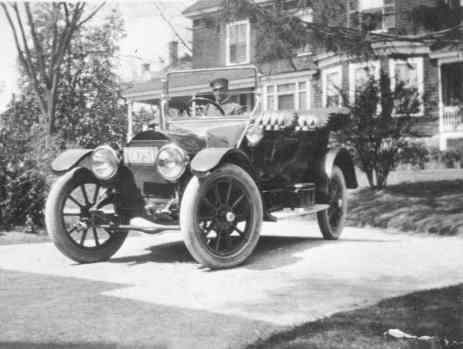
At the DeBoise Family Reunion in 1984 the senior family members – Rose, Frank, James, Joe, and Teddy – received framed pictures of their parents, brothers and sisters. All the senior family members have since left us, and these pictures have been passed down to their children. Pictures of Frank and Patience DeBoise have already been posted. I am including pictures of the rest, as well as a picture of Frank DeBoise driving a car. Thank you, family members, for finding the pictures and putting this memento together.

Frank DeBoise
Frank DeBoise about 1910

George W and Jeanette (Freeman) Andrews of Vernon and Manchester, Connecticut

RI 14th Heavy Artillery Battle Flag
RI 14th Heavy Artillery (Colored). Used by regiment during Civil War. Textile collection RI Historical Society rihs.org


When George Washington Andrews, Ruth Andrew’s great grandfather, was born in 1853, the United States was in turmoil over slavery. Franklin Pierce was the 14th President of the United States. Harriet Beecher Stowe had released her bestselling book “Uncle Tom’s Cabin” the year before. When George was four, the Supreme Court issued the Dred Scott decision, stating that slaves are not free when transported from a slave territory to a free territory. They also ruled that Congress could not ban slavery in a U.S. Territory, and that blacks could not be awarded citizenship.

Abolitionists, opposed to slavery, became more vocal. The conflict between pro-slavery and anti-slavery supporters became more violent. John Brown, educated in Massachusetts and Connecticut, became strongly committed to the abolitionist movement while living in Springfield, Massachusetts. He became the leader of violent actions against slaveholders and slave supporters, most known for the Pottawatomie Massacre in Kansas of pro-slavery supporters and the raid on Harper’s Ferry in Virginia while trying to initiate an armed slave revolt. The turmoil of the 1850s led to the Civil War. It was much better to be a black or Indian family living in the North than the South, but life was hard.

In New England, the Industrial Revolution resulted in more factories opening along rivers. The upper Connecticut River Valley experienced the growth of industry, as well as French-Canadian and other immigrants moving to the area to work in the new industries.

George Washington Andrews was born March 25, 1853 in Ludlow, Hampden County, Massachusetts. He was the son of Calvin Dexter and Lovina (Jones) Andrews, and the sixth of 10 children. About the time of his birth, his father left the family and moved to Ellington, Connecticut. Not far from Ludlow, Dexter saw this as an opportunity to ensure his family had a better life. His family received state assistance and was listed on the Ludlow pauper rolls as early as November 1, 1853.[1] Lovina’s family was still living in Ludlow, and provided support for her and her children while her husband was getting established in Connecticut. Her family was from Connecticut, and there was movement back and forth between Massachusetts and Connecticut among family members. Continue reading “George W and Jeanette (Freeman) Andrews of Vernon and Manchester, Connecticut”

Charles Andrews and Martha Gibbons

palmer_ma
Main Street looking West. Palmer, Mass. greenpasture.com

Charles “Charlie” Henry Andrews, the grandfather of Ruth and father of Blanche Louise, was described by his great grandson as a nice man, very easy going. He was tall, 5’11” and 185 pounds according to his World War I draft registration, with coppery colored skin, black straight hair – what was left of it since he was balding, brown eyes, and he had a big moustache. He chewed tobacco and smoked a pipe. A big Yankees fan, he did not like the Red Sox. He thought the Red Sox were foolish for trading Babe Ruth, and that they were prejudice against black baseball players. In fact, the Red Sox was the last professional baseball team to integrate, although they had the opportunity to sign Jackie Robinson, Willie Mays, and other talented black players and chose not to do so. They did not integrate their team until 1959, long after Charlie’s death. Charlie did not particularly like black people from the South. He said there were African-Americans fighting with the Confederates, and shooting at his people, who fought for the North. His father-in-law, as well as several of his and his wife’s uncles fought in the Civil War for the North.

Charlie was born September 11, 1877 in Vernon, Connecticut, the son of George Washington and Jeanette (Freeman) Andrews. He was the second child and first son of his parents’ eleven children. As a young man, he worked as a farm laborer on the local farms. He met Martha “Mattie” H. Gibbons, and they married on January 10, 1895 in Monson, Massachusetts. Charlie was 17 years old, and Mattie was 25. Mattie was pregnant with their first and only daughter, Blanche Louise, at the time of their marriage. They initially lived in Vernon, and moved to Monson by 1900. They were living in Palmer in 1906, where they made their home for the remainder of their lives. Continue reading “Charles Andrews and Martha Gibbons”